Whey, Casein and Other Aliases: Where Dairy Hides on Labels
Quick Answer: Dairy hides on labels under at least a dozen names — whey, casein, caseinate, lactalbumin, lactoglobulin, milk solids, curds and ghee among them. In the U.S., major milk sources must be declared in plain language for allergen purposes, which catches most cases, but flavored chips, protein bars, “non-dairy” creamer and some deli meats are the classic ambush foods. Certified vegan logos are the fastest shortcut.
Going dairy-free comes with a plot twist: dairy is a master of disguise.
It tours ingredient lists under aliases, and it turns up in foods with absolutely no business containing it. Some potato chips. Most protein bars. Certain deli meats. A creamer that legally calls itself non-dairy.
Time to learn its passport names.

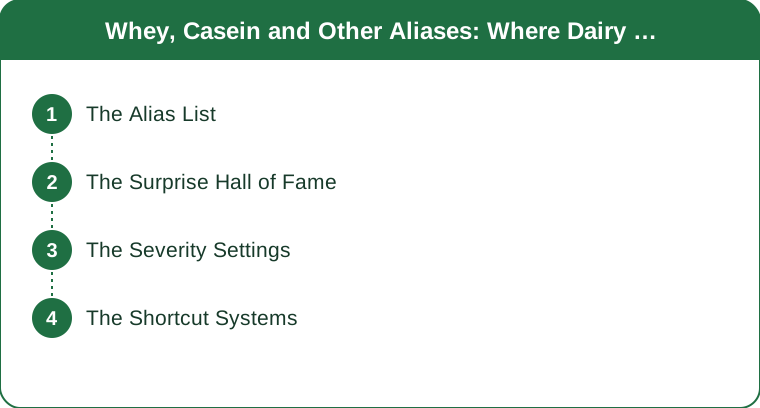
What names does dairy hide under on ingredient labels?
The working alias list, all of which are dairy and all of which are perfectly legal to print:
- Whey (and whey protein concentrate, isolate, hydrolysate)
- Casein, caseinate, sodium caseinate, calcium caseinate
- Lactalbumin, lactoglobulin, lactoferrin
- Milk solids, milk powder, milk fat, buttermilk solids
- Curds, rennet casein, ghee
- Lactose, lactulose
The helpful part: U.S. allergen labeling law requires milk to be identified in plain language for major sources — either in the ingredient list itself or in a “Contains: Milk” statement. That catches the majority of cases and is why the “Contains” line is the first thing to read.
The unhelpful part: the “Contains” statement covers the major allergen, but reading the full ingredient list still matters when you’re being strict, and “may contain” advisory statements are voluntary and inconsistently applied.
Two false friends worth knowing: lactic acid, lactate and cocoa butter are usually not dairy despite the names. Lactic acid is typically produced by bacterial fermentation of plant sugars.
Which foods secretly contain dairy?
The hall of fame, roughly in order of how often they catch people:
Flavored chips and crackers. Cheese-dust technology is applied liberally, including to flavors that sound entirely savory — sour cream and onion, obviously, but also many barbecue and “seasoned” varieties.
Protein bars and powders. The whey empire is vast. Even bars marketed as plant-forward frequently use whey isolate for texture.
“Non-dairy” creamer. This one is genuinely absurd: U.S. labeling has historically permitted products containing sodium caseinate to be marketed as non-dairy. Read the ingredients, not the front of the package.
Deli meats and sausages. Milk proteins are used as binders in some processed meats.
Bread and baked goods. Milk powder is a common dough conditioner in commercial bread.
Canned tuna. Some brands use casein in the broth. Not most, but enough to matter.
Instant soups, gravies and seasoning packets. Milk solids as a thickener and flavor carrier.
Milk chocolate, obviously — but also plenty of dark chocolate, either as an ingredient or via shared equipment.
The working heuristic: assume anything crunchy, coated, powdered or “creamy” deserves a label check.

Does it matter how strict you need to be?
Enormously, and this is where a lot of confusing advice comes from — two different groups are reading the same label for different reasons.
If you’re lactose intolerant, you care about lactose quantity, not the presence of milk protein. Aged hard cheeses (parmesan, aged cheddar) and butter contain very little lactose. Whey protein concentrate contains a fair amount; whey isolate much less. Most people with lactose intolerance tolerate some amount, and the threshold is individual.
If you have a milk allergy, you’re reacting to the protein, and quantity matters far less. That means full alias vigilance, attention to “may contain” lines, and awareness of shared-equipment risk. This is a medical situation, not a preference.
If you’re avoiding dairy by choice — for skin, digestion, ethics or anything else — you get to set your own threshold, and it’s worth deciding what it is rather than agonizing case by case.
Know which game you’re playing. It changes almost every decision downstream.
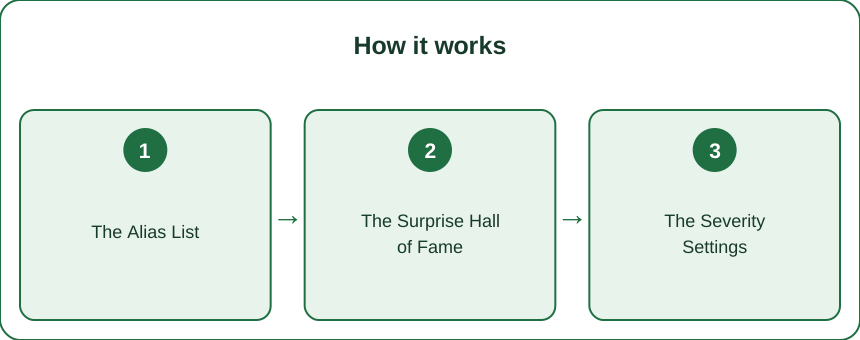
What are the shortcuts?
Certified vegan logos. These guarantee no dairy, full stop. It’s the single fastest filter in any aisle, and it doesn’t require you to memorize anything.
“Plant-based” guarantees marketing. It’s not a regulated term in the way vegan certification is. Check the label anyway.
Barcode scanner apps. Several will flag allergens instantly from a photo of the barcode. Aisle-speed alias checking without the memorization.
Shop the perimeter when you’re tired. Whole single-ingredient foods — produce, plain meat, grains, legumes, eggs — need no decoder at all. On a low-energy shopping trip, the perimeter of the store remains undefeated.
Build a safe list. Once you’ve verified a brand and product, write it down. Most people’s shopping is 20 to 30 repeat items; verify them once and the weekly shop stops being an investigation.
Re-check occasionally. Manufacturers reformulate without announcing it. Twice a year, re-read the labels on your staples.
FAQ
Is whey dairy?
Yes. Whey is one of the two main proteins in milk (casein is the other), separated during cheese-making. Whey protein powder is a dairy product regardless of how it’s marketed.
Can I eat food labeled “may contain milk” if I’m lactose intolerant?
Generally yes — advisory statements refer to trace cross-contact amounts, which are unlikely to trigger lactose-intolerance symptoms. For a diagnosed milk allergy, discuss the threshold with your allergist rather than deciding on your own.
Is ghee dairy-free?
No. Ghee is clarified butter, so it’s dairy. It’s very low in lactose, which makes it workable for many lactose-intolerant people, but it still contains trace milk proteins and isn’t appropriate for a milk allergy.
TL;DR:
- Learn the aliases: whey, casein, caseinate, lactalbumin, milk solids, curds, ghee.
- U.S. law requires a plain-language milk declaration for major sources — read the “Contains” line first.
- Ambush foods: flavored chips, protein bars, “non-dairy” creamer, some deli meats and canned tuna.
- Lactose intolerance = quantity. Milk allergy = any protein. Different games, different rules.
- Certified vegan logos are the fastest shortcut; the store perimeter needs no decoder at all.
Keep Reading
This article is for general informational purposes only and is not medical advice. Always consult a qualified health professional for guidance specific to you.