The Hidden Dairy Sources at Restaurants That Aren't on the Allergen Menu
Dairy-free restaurant ordering gets treated as simple once the obvious offenders — cheese, cream sauces, butter — are avoided, and a surprising number of hidden dairy sources hide in dishes that don’t read as dairy-containing at all. Here is where dairy actually hides beyond the obvious items, and how to ask the right questions to actually catch it. This is general information, not medical advice.

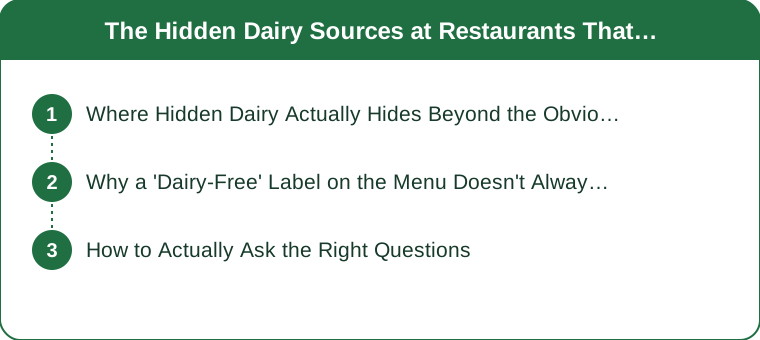
Where Hidden Dairy Actually Hides Beyond the Obvious Items
The sneaky sources: the the-bread-and-baked-goods-often-contain-butter-or-milk-by-default (the standard restaurant bread, rolls and many baked sides commonly containing butter or milk in the base recipe even when nothing about the dish reads as dairy-containing — the bread-is-one-of-the-most-commonly-missed-hidden-dairy-sources), the the-soups-and-sauces-often-use-a-butter-or-cream-base-even-when-not-obviously-creamy-looking (the roux-based sauces and many soups starting with a butter base regardless of the final dish’s appearance, meaning a clear-looking soup can still contain dairy from its base preparation — the a-clear-appearance-doesnt-rule-out-a-dairy-based-starting-point), the the-processed-and-pre-made-components-often-have-dairy-in-the-ingredient-list-that-isnt-obvious-from-the-dish-name (the pre-made dressings, marinades, spice blends and sauces frequently containing milk derivatives as a minor ingredient not reflected in how the dish is described on the menu, echoing the hidden-dairy-label-guide packaged-food logic applied to restaurant components — the pre-made-components-can-carry-hidden-dairy-the-menu-description-never-mentions), the the-shared-cooking-surfaces-and-equipment-create-cross-contact-risk-beyond-ingredients-alone (the shared grills, pans and fryers used across multiple dishes creating a cross-contact risk that exists independent of a specific dish’s actual ingredient list, relevant for anyone with a true dairy allergy rather than just a preference — the cross-contact-is-a-separate-risk-from-the-ingredient-list-itself), the the-flavor-enhancers-and-finishing-touches-are-a-common-last-minute-addition-that-gets-missed (the a pat of butter or a cream drizzle added as a finishing touch right before serving, sometimes not even considered part of the ‘recipe’ by kitchen staff describing the dish — the finishing-touches-are-easy-for-kitchen-staff-to-forget-to-mention-since-they-dont-think-of-them-as-ingredients), and the frame (the hidden sources as bread and baked goods, butter-or-cream-based soups and sauces regardless of appearance, pre-made components with unlisted dairy, cross-contact from shared equipment, and last-minute finishing touches — categories that don’t show up on a quick mental scan of ‘obvious’ dairy dishes).

Why a ‘Dairy-Free’ Label on the Menu Doesn’t Always Mean Fully Dairy-Free
The label gap: the the-dairy-free-label-often-only-reflects-the-main-listed-ingredients-not-the-full-preparation (the menu labeling frequently reflecting only the dish’s headline ingredients rather than every component involved in its actual preparation, meaning a labeled dish can still involve a dairy-containing base or garnish the label never accounted for — the the-label-covers-the-obvious-ingredients-not-necessarily-the-full-preparation-chain), the the-kitchen-staff-turnover-and-training-gaps-mean-the-label-isnt-always-reliably-applied (the front-of-house menu labeling not always staying perfectly synced with actual kitchen practice, especially with staff turnover, meaning the same labeled dish can be prepared inconsistently over time — the labeling-accuracy-depends-on-consistent-staff-training-that-doesnt-always-hold-up-in-practice), the the-a-label-thats-accurate-for-a-preference-based-diner-may-not-meet-the-stricter-bar-a-true-allergy-requires (the a menu’s dairy-free labeling standard sometimes calibrated to a general preference-based audience rather than the stricter cross-contact and trace-ingredient standard a true allergy requires — the the-labeling-standard-and-the-allergy-safety-standard-arent-always-the-same-bar), and the frame (the label gap as reflecting headline ingredients rather than full preparation, being only as reliable as current staff training, and sometimes calibrated to a looser standard than a true allergy needs — reasons a label is a helpful starting point but not a substitute for asking the specific questions directly).
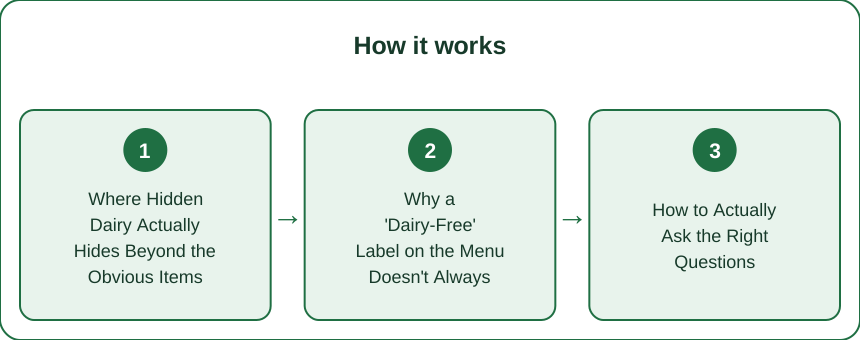
How to Actually Ask the Right Questions
The specific approach: the ask-about-preparation-method-not-just-ingredients-in-the-final-dish-name (the asking specifically how a dish is prepared — ‘is this cooked with butter’ rather than just ‘does this have dairy’ — catching preparation-stage dairy that a simple ingredient question might miss — the ask-about-the-cooking-process-not-just-the-finished-dish), the the-ask-specifically-about-bread-and-any-included-sides-not-just-the-main-dish (the confirming bread, rolls or included sides separately, since these often get mentally excluded from a ‘does this dish have dairy’ question focused on the entree alone — the sides-need-their-own-specific-question-not-just-the-main-course), the the-ask-if-a-sauce-or-soup-starts-with-a-butter-or-cream-base-specifically (the a direct, specific question about the base preparation of any sauce or soup, since a finished dish’s appearance often gives no clue about its starting base — the a-direct-base-question-catches-what-appearance-alone-cannot), the the-mention-cross-contact-concern-explicitly-if-a-true-allergy-not-just-a-preference-is-involved (the explicitly stating an allergy rather than a preference prompting kitchen staff to take shared-equipment cross-contact seriously in a way a general dairy-free request might not — the naming-it-as-an-allergy-specifically-changes-how-seriously-cross-contact-gets-treated), the the-ask-about-any-finishing-touches-or-garnishes-specifically (the directly asking whether butter, cream, or cheese gets added as a finishing touch, since this step often goes unmentioned in a general ingredient rundown — the a-specific-finishing-touch-question-catches-what-general-questions-miss), and the frame (the right questions as asking about preparation method rather than just the dish name, confirming bread and sides separately, asking directly about a sauce or soup’s base, explicitly naming an allergy when cross-contact matters, and asking specifically about finishing touches — specific enough questions to actually catch what a general ‘is this dairy-free’ question typically misses. This is general information, not medical advice.)
Hidden dairy in restaurant meals goes well beyond obvious cheese and cream dishes — standard bread and baked sides commonly contain butter or milk by default, soups and sauces often start from a butter or cream base regardless of how the finished dish looks, pre-made dressings and marinades can carry unlisted milk derivatives, shared cooking equipment creates a cross-contact risk independent of any dish’s actual ingredient list, and a finishing pat of butter or cream drizzle often goes unmentioned since kitchen staff don’t always think of it as part of the recipe. Catching these hidden sources means asking about preparation method rather than just the dish name, confirming bread and any included sides separately from the main course, asking directly whether a sauce or soup starts from a butter or cream base, explicitly naming an allergy rather than a general preference when cross-contact genuinely matters, and asking specifically about any finishing touches added right before serving. This is general information, not medical advice.
Keep Reading
This article is for general informational purposes only and is not medical advice. Always consult a qualified health professional for guidance specific to you.