The Dairy-Free Pumpkin Spice Latte: What Cafes Actually Use and How to Do Better at Home
Quick Answer: Swapping to oat or almond milk does not make a seasonal latte dairy-free at most cafes - many pumpkin spice sauces contain condensed milk or milk-derived ingredients, and the whipped topping almost always does. Always ask about the sauce, not just the milk. At home, use barista-blend oat milk, keep the espresso and milk within about 20F of each other, and add the spice mixture to the milk rather than the hot shot to avoid splitting.
Every autumn, the same disappointing conversation happens at a counter. The milk is swapped, the drink arrives, and somewhere in the ingredient list there is dairy anyway.

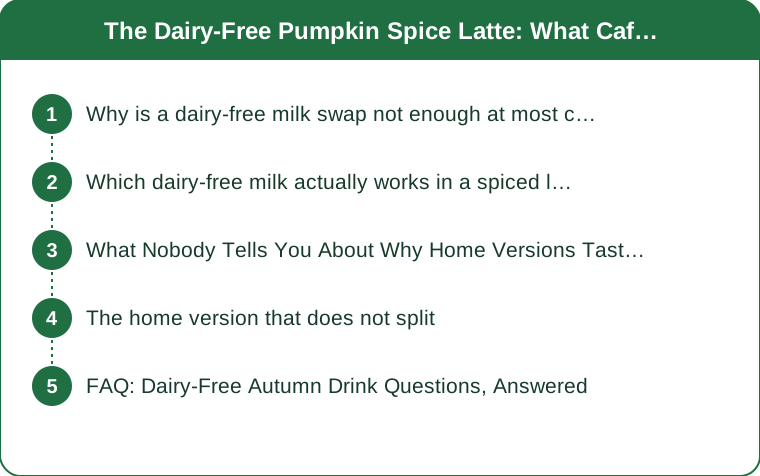
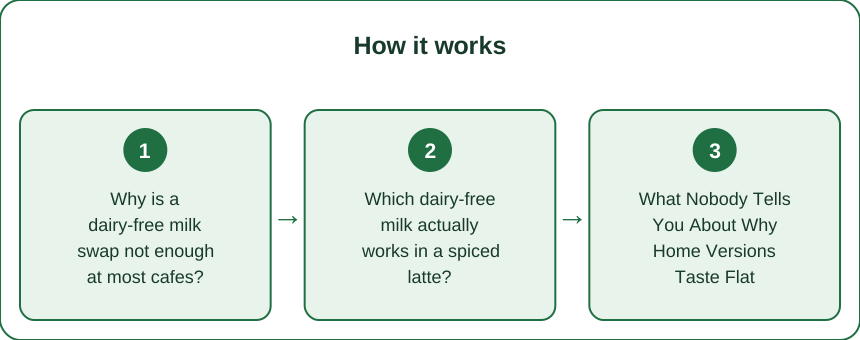
Why is a dairy-free milk swap not enough at most cafes?
The milk is only one of four dairy-carrying components in a seasonal drink.
The sauce or syrup. This is the one that catches people. Pumpkin-spice-style sauces at several major chains have historically contained sweetened condensed milk as a base ingredient, which is what gives them their thick, opaque texture. A thin, clear syrup is more likely to be dairy-free; a thick, opaque sauce dispensed from a pump bottle is worth asking about specifically.
The topping. Standard whipped cream is dairy. Some locations stock a non-dairy alternative, many do not, and the default on a seasonal drink is usually whipped unless you say otherwise.
The topping dust. Spice blends and dessert-style toppings sometimes contain milk powder as a flow agent or flavor carrier.
Shared equipment. Steam wands, pitchers, and blenders are typically shared. For a preference this does not matter; for a diagnosed dairy allergy it absolutely does, and it is worth saying which one you have so staff can respond appropriately.
How to ask so you get a useful answer: rather than asking whether the drink can be made dairy-free, ask whether the pumpkin sauce itself contains dairy. That is a specific question staff can check on an ingredient card, and it is the one that determines the answer.
Which dairy-free milk actually works in a spiced latte?
The performance gap between plant milks in a hot, acidic, spiced drink is bigger than in a plain latte.
Barista-blend oat is the best all-round choice. The higher fat content and added stabilizers give it a genuinely creamy mouthfeel, it steams into a workable microfoam, and it is the most heat- and acid-stable of the common options. Standard oat milk is noticeably worse - the barista version exists precisely because of these problems.
Soy produces the most stable foam and the highest protein content, which matters if the drink is standing in for breakfast. Its downside is a distinct flavor that some people find competes with the spice.
Almond is the most likely to split. It has low protein and low fat, which is a poor combination against hot acidic espresso. If almond is what you have, heat it gently and never let it boil.
Coconut works flavor-wise with warming spices and does not foam well. Good for a drink you stir rather than one you top.
Cashew and macadamia are creamy, split less than almond, and cost more.
A note on splitting: the curdling you see is the plant protein reacting to the espresso’s acidity and heat. It is a texture failure, not a safety issue - the drink is still fine to drink, it just looks unappealing.

What Nobody Tells You About Why Home Versions Taste Flat
You buy the same syrup, the same milk, make it at home, and it tastes thin. Three reasons, none of them obvious.
Fat carries flavor. Many aromatic compounds in cinnamon, nutmeg, clove, and ginger are fat-soluble. Whole dairy milk carries them; a low-fat plant milk does not. This is why the same spice quantity reads as bold in a dairy latte and faint in an almond one. The fix is adding fat, not adding spice - a teaspoon of coconut cream or a splash of full-fat oat transforms the same recipe.
Salt is doing invisible work. Commercial syrups contain more salt than home recipes. A pinch of salt in a spiced drink amplifies sweetness perception and rounds the spice noticeably. Most home versions taste flat because they have none.
Real pumpkin adds body, not much flavor. Pumpkin puree contributes texture and a subtle earthiness. Almost all of what people identify as pumpkin spice flavor comes from cinnamon, ginger, nutmeg, and clove. If your home version tastes like squash, you used too much puree and not enough spice.
And the temperature detail: adding cold plant milk directly to a fresh espresso shot is the most common cause of splitting at home. Warming the milk first so the two liquids meet within roughly 20F of each other solves most of it. Pour the espresso into the milk, not the milk into the espresso.
The home version that does not split
Spiced base (makes about 6 servings):
- 1/3 cup pumpkin puree
- 1/3 cup maple syrup or brown sugar
- 2 tsp cinnamon, 1 tsp ginger, 1/2 tsp nutmeg, 1/4 tsp clove
- 1/4 tsp salt
- 1 tsp vanilla
Warm everything in a small pan over low heat for 5 minutes, whisking. Do not boil - the spices turn bitter. Cool and refrigerate up to a week.
Per drink:
- Put 2 tbsp of the base into your mug.
- Heat 3/4 cup barista oat milk to about 150F - steaming and just starting to move, not boiling. Boiling plant milk is the second most common cause of splitting.
- Whisk a splash of the warm milk into the base first to loosen it. This step is what prevents the grainy sediment at the bottom.
- Add the rest of the milk, whisking or frothing.
- Pull one or two shots of espresso and pour into the milk mixture.
- Top with coconut whipped cream and a dusting of cinnamon.
Troubleshooting: grainy means the base was not loosened first. Split means either the milk boiled or it was too cold when it met the espresso. Flat flavor means it needs salt and fat before it needs more spice. Too sweet means reduce the maple in the base, not the base quantity in the cup.
FAQ: Dairy-Free Autumn Drink Questions, Answered
Is oat milk always dairy-free?
The milk itself is, but check for cross-contamination statements if you have a diagnosed allergy rather than an intolerance. Also note oat milk is not gluten-free unless labeled so - oats are frequently processed alongside wheat.
Why does my oat milk foam beautifully one week and not the next?
Batch variation and age both matter. Barista blends foam best when fresh and well-shaken, and they lose foaming ability over about a week after opening. Temperature matters too - milk straight from a very cold fridge foams less well than milk that has sat out for five minutes.
Is the calorie difference meaningful between dairy and plant seasonal drinks?
Usually less than people expect, because the sauce and topping carry most of the sugar and fat. A plant milk swap on a large seasonal drink often changes the total by a modest amount. If calories are the goal, halving the sauce does far more than changing the milk.
Can I make this iced without it splitting?
Iced is actually easier - splitting is heat-driven. Mix the base into cold milk thoroughly first, then pour espresso over ice into it. Shake or stir immediately rather than letting the shot sit on the ice.
TL;DR:
- Ask about the sauce, not the milk - many seasonal sauces contain condensed milk regardless of what milk you choose.
- Barista-blend oat is the most reliable; almond splits most; soy foams best.
- Home versions taste flat because they lack fat and salt, not spice.
- Split drinks come from boiling the milk or a big temperature gap with the espresso.
The seasonal drink is one of the better parts of autumn and there is no reason to give it up. Just get specific at the counter, and keep a jar of the spiced base in your own fridge for the mornings you would rather not have that conversation at all.
Keep Reading
This article is for general informational purposes only and is not medical advice. Always consult a qualified health professional for guidance specific to you.