Dairy-Free Protein Sources That Actually Add Up (Without Whey)
Quick Answer: Solid dairy-free protein sources include tofu and tempeh (roughly 15-20g per serving), edamame, lentils and beans, pea-protein or soy-protein powder, and certain nuts and seeds like hemp seeds — combining a couple of these across meals closes the gap left by cutting whey or Greek yogurt fairly easily.
The real challenge with dairy-free protein usually isn’t availability, it’s that people default to comparing everything to whey’s convenience instead of building a slightly different, equally workable routine.

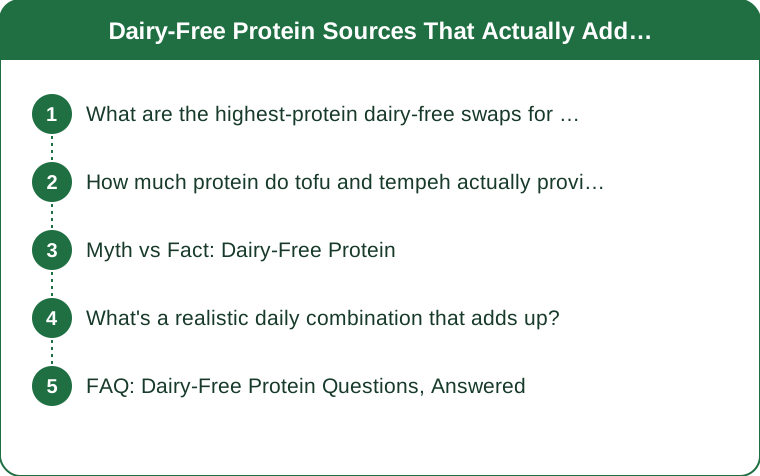
What are the highest-protein dairy-free swaps for a morning yogurt bowl?
Coconut or almond yogurt alternatives are typically much lower in protein than dairy yogurt, so pairing them with a scoop of pea or soy protein powder, or a tablespoon of hemp seeds (about 5g protein per tablespoon), closes most of the gap without changing the format of the meal.
How much protein do tofu and tempeh actually provide?
A typical 3.5oz (100g) serving of firm tofu provides roughly 8g of protein, while the same amount of tempeh provides closer to 19g due to its denser, fermented soybean structure — tempeh in particular is a strong dairy-free protein source per serving.

Myth vs Fact: Dairy-Free Protein
Myth: plant proteins are all ‘incomplete’ and therefore inferior. Fact: soy protein (tofu, tempeh, edamame) is a complete protein containing all essential amino acids, comparable in that respect to animal-based sources.
Myth: you need protein powder to hit your targets dairy-free. Fact: whole-food combinations (legumes, tofu, tempeh, seeds) can meet most people’s protein needs without powder, though powder is a convenient option, not a requirement.
Myth: dairy-free protein sources are automatically lower in protein. Fact: some are (like most nut milks), but others (tempeh, seitan, protein powder) are comparable to or higher than common dairy sources per serving.
What’s a realistic daily combination that adds up?
A day combining a tempeh or tofu-based lunch (~15-20g), a lentil or bean-based dinner component (~15g), and a protein powder-boosted smoothie or oat bowl (~20-25g) reaches 50-60g from just three meal components, without needing dairy at any point.
FAQ: Dairy-Free Protein Questions, Answered
Is soy protein safe to eat daily?
For most people without a specific soy allergy or medical concern, moderate daily soy consumption is considered safe based on current research; those with thyroid or hormone-sensitive conditions should check with a doctor about their specific situation.
Do I need to combine plant proteins in the same meal for complete amino acids?
No — this older idea has been updated; eating a variety of protein sources across the day is sufficient, they don’t need to be combined in a single meal.
What’s the easiest dairy-free protein source for someone just starting out?
Edamame and canned lentils are both low-effort, ready-to-eat options that require minimal preparation, making them a practical starting point.
TL;DR:
- Tempeh, tofu, edamame, lentils, and pea/soy protein powder are the core dairy-free protein sources
- Tempeh (~19g per 100g) is notably higher in protein than tofu (~8g per 100g)
- Soy protein is a complete protein, not an inferior swap
- Combining 2-3 of these sources across the day closes the gap left by cutting whey or yogurt
Dairy-free protein just requires a slightly different routine, not a compromise on total protein intake.
Keep Reading
This article is for general informational purposes only and is not medical advice. Always consult a qualified health professional for guidance specific to you.