How to Actually Choose a Dairy-Free Protein Powder That Doesn't Taste Chalky
Quick Answer: A blend of pea and rice protein (rather than either alone) solves the chalky texture and incomplete amino acid profile that single-source dairy-free powders often have — pea protein alone tends to be gritty, rice protein alone is often incomplete, but together they cover each other’s gaps in both texture and nutrition.
One bad dairy-free protein shake — thick, gritty, tasting faintly like cardboard — is usually enough to convince someone dairy-free protein just isn’t as good. It’s usually a protein-source problem, not a category problem.

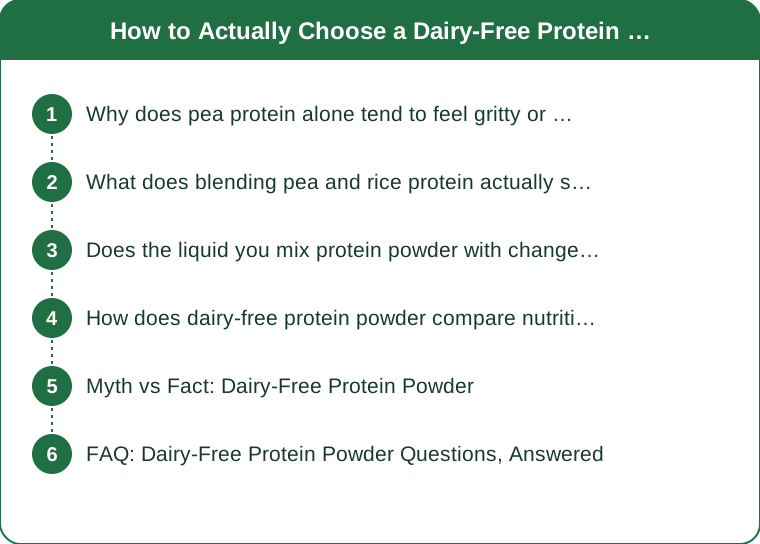
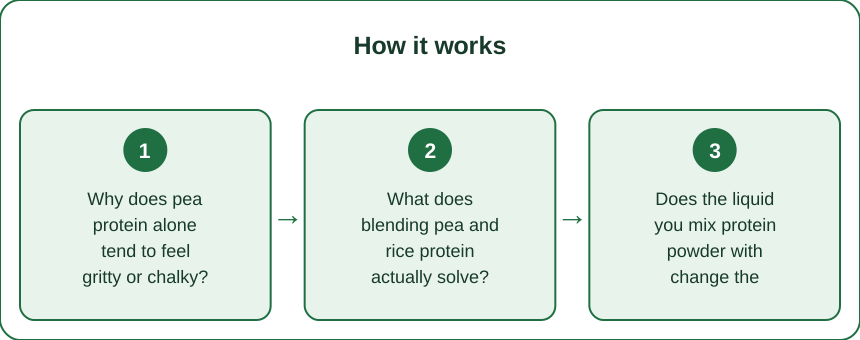
Why does pea protein alone tend to feel gritty or chalky?
Pea protein isolate has a naturally coarser particle structure than whey, which shows up as a slightly grainy mouthfeel especially when mixed with just water rather than milk or a milk alternative. This is a texture issue specific to the protein source, not a sign of poor quality.
What does blending pea and rice protein actually solve?
Rice protein has a smoother, finer texture that helps offset pea protein’s grittiness, and the two sources also complement each other’s amino acid profiles — pea protein is lower in methionine while rice protein is lower in lysine, so a blend gets closer to a complete amino acid profile than either alone.
Does the liquid you mix protein powder with change the texture outcome?
Significantly — mixing dairy-free protein powder with a barista-style oat milk or a thicker plant milk produces a noticeably creamier result than mixing with plain water, since the added fat and thickeners in barista blends compensate for texture gaps that water doesn’t fill.

How does dairy-free protein powder compare nutritionally to whey, beyond just texture?
A well-formulated pea-rice blend can deliver a comparable amount of protein per serving to whey (typically 20-25g), though whey does have a slight edge in leucine content specifically, a factor relevant mainly for people focused heavily on muscle protein synthesis timing rather than general protein needs.
Myth vs Fact: Dairy-Free Protein Powder
Myth: All dairy-free protein powders taste and mix badly. Fact: single-source powders, especially pea-only, are the most common culprits — blended formulas mix and taste noticeably closer to whey.
Myth: Plant protein can’t provide a complete amino acid profile. Fact: individual plant sources are often incomplete alone, but blends like pea-rice or pea-hemp cover each other’s gaps effectively.
Myth: Dairy-free protein is only for people with allergies or intolerances. Fact: many people choose it for digestive comfort, environmental reasons, or personal preference even without a dairy sensitivity.
FAQ: Dairy-Free Protein Powder Questions, Answered
Is dairy-free protein powder a good option for muscle building goals specifically?
Yes — a well-formulated blend with adequate total protein and reasonably complete amino acids supports muscle building goals effectively when total daily protein intake is adequate.
Why do some dairy-free protein powders taste bitter?
Certain plant protein isolates, pea in particular, carry a naturally slightly bitter or earthy note that manufacturers offset with flavoring and sweeteners — a heavily unflavored or ‘natural’ labeled product is more likely to have this taste come through.
Does a dairy-free protein powder need to be organic or non-GMO to be high quality?
Not necessarily — those labels reflect sourcing preferences rather than protein quality or texture, so they’re worth choosing based on personal values rather than assuming they predict a better-tasting product.
TL;DR:
- Pea protein alone is the most common cause of gritty, chalky dairy-free shakes
- A pea-rice protein blend fixes both texture and amino acid completeness gaps
- Mixing with a barista-style plant milk instead of water noticeably improves creaminess
- A well-formulated blend delivers comparable protein per serving to whey, with only a minor leucine gap
Next time you’re shopping, check the ingredient list for a pea-rice or pea-hemp blend before judging the category by a single-source powder.
Keep Reading
This article is for general informational purposes only and is not medical advice. Always consult a qualified health professional for guidance specific to you.