Why 'Dairy-Free' Doesn't Automatically Mean Vegan, and Why That Confusion Matters
Quick Answer: No — ‘dairy-free’ only guarantees the absence of milk-derived ingredients, while ‘vegan’ guarantees no animal products at all, so a dairy-free product can still legally contain eggs, honey, gelatin, or other non-dairy animal ingredients unless it’s also separately labeled vegan.
You grab something labeled ‘dairy-free’ assuming it’s also vegan, and later notice egg whites or honey on the ingredient list. That’s not a labeling error — the two claims answer different questions, and knowing the difference actually matters for how you shop.

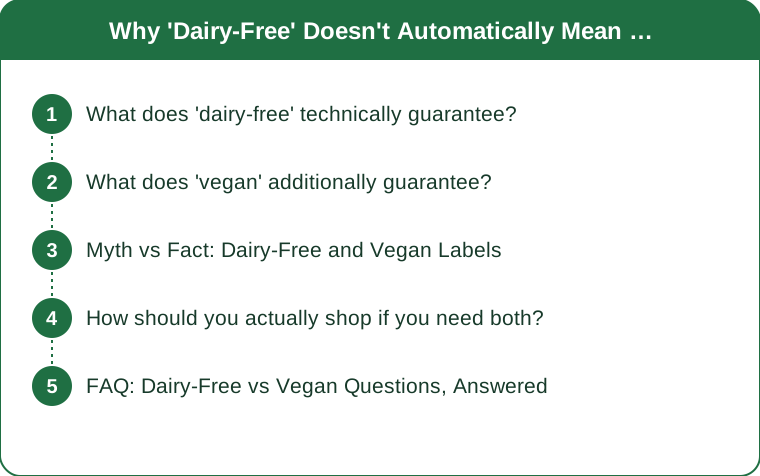
What does ‘dairy-free’ technically guarantee?
It guarantees the product contains no milk or milk-derived ingredients (no butter, whey, casein, or lactose) — nothing more, nothing less. It says nothing about eggs, honey, gelatin, or other animal-derived ingredients that aren’t dairy.
This is why a dairy-free baked good can still contain eggs, or a dairy-free gummy candy can still contain gelatin (an animal product) — both fully satisfy the dairy-free claim while failing a vegan one.
What does ‘vegan’ additionally guarantee?
Vegan certification or labeling means zero animal-derived ingredients of any kind — no dairy, no eggs, no honey, no gelatin, and often extends to processing methods (like verifying sugar wasn’t processed using bone char).
A genuinely vegan product is always also dairy-free by definition, but the reverse isn’t true — which is the exact confusion that trips people up.

Myth vs Fact: Dairy-Free and Vegan Labels
Myth: If it says dairy-free, it’s safe for a vegan diet. Fact: Only if it’s also separately labeled vegan or you’ve checked the full ingredient list — dairy-free alone doesn’t rule out eggs, honey, or gelatin.
Myth: Vegan products are automatically also lactose-free and dairy-free. Fact: True by definition, since vegan excludes all animal products including dairy — this direction of the assumption actually holds.
Myth: These labels are regulated the same strict way everywhere. Fact: Labeling rules and enforcement vary by country and product category — always check the actual ingredient list rather than relying on front-of-package claims alone, especially for imported or specialty products.
How should you actually shop if you need both?
Check for a ‘vegan’ certification specifically, not just ‘dairy-free,’ if avoiding all animal products matters to you — the two labels aren’t interchangeable shortcuts for each other.
If a product only says dairy-free, scan the ingredient list for eggs, honey, gelatin, casein, whey, and carmine (a common animal-derived red coloring) before assuming it fits a fully plant-based diet.
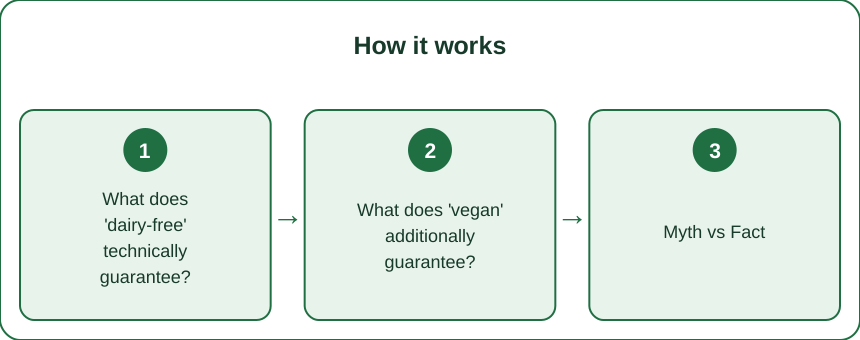
FAQ: Dairy-Free vs Vegan Questions, Answered
Why would a company label something dairy-free instead of vegan if it qualifies for both?
Often marketing focus — a product aimed at the lactose-intolerant market may lead with ‘dairy-free’ even if it happens to also be vegan, without pursuing formal vegan certification.
Are dairy-free and lactose-free the same thing?
Close but not identical — lactose-free products may still contain other milk proteins (like casein) processed to remove lactose specifically, which matters for a milk allergy versus lactose intolerance.
What ingredients should I scan for if a product is only labeled dairy-free?
Eggs, honey, gelatin, whey, casein, and carmine are the most common non-dairy animal ingredients that slip through a dairy-free-only label.
TL;DR:
- Dairy-free only guarantees no milk-derived ingredients — nothing about eggs, honey, or gelatin
- Vegan guarantees zero animal products of any kind, and is always also dairy-free
- The two labels aren’t interchangeable — check for a specific vegan claim if that’s your requirement
- Scan ingredient lists for eggs, honey, gelatin, whey, and carmine on dairy-free-only products
Knowing the difference between these two labels prevents an easy, common shopping mistake.
Keep Reading
This article is for general informational purposes only and is not medical advice. Always consult a qualified health professional for guidance specific to you.