Dairy Free Calcium: What Actually Adds Up in a Normal Day
Quick Answer: The main dairy-free calcium sources that genuinely add up are fortified plant milks (typically around 120mg per 100ml, matching cow’s milk, but only if fortified and shaken), calcium-set tofu, fortified cereals, tinned fish with bones, and low-oxalate greens like kale and pak choi. Spinach is high in calcium and poorly absorbed because of its oxalate content. Most adults need around 700-1000mg daily depending on national guidance.
Cutting dairy is easy. Replacing the calcium is where most people quietly fall short without noticing.
Here is what actually counts, with the two details that trip people up.
This is general information, not medical advice. If you have specific bone health concerns or take medication, discuss supplementation with a doctor or dietitian.

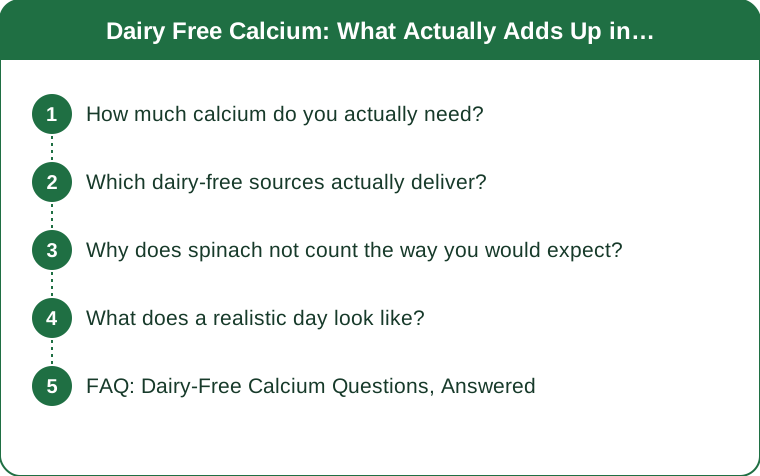
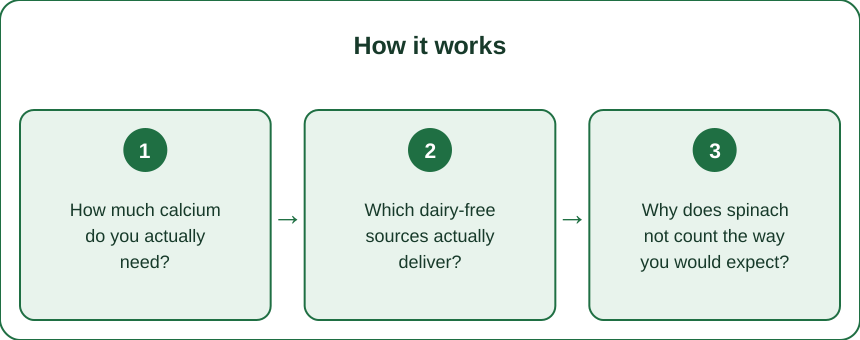
How much calcium do you actually need?
It depends on where you are and your life stage, and the numbers are less alarming than they sound.
Guidance varies by country. UK guidance sets 700mg daily for adults. US guidance is generally higher, around 1000mg for most adults and 1200mg for women over 50. The difference reflects different interpretations of the same evidence rather than a factual disagreement about bodies.
Higher needs apply in specific situations: adolescence, pregnancy and breastfeeding, and post-menopause, where falling oestrogen accelerates bone loss.
What calcium does beyond bone. Roughly 99% of body calcium is in bone and teeth, with the remainder involved in muscle contraction, nerve signalling and blood clotting. Blood calcium is tightly regulated - if intake is insufficient, the body draws from bone to maintain blood levels. Which is why deficiency is silent for years and shows up as bone density loss rather than symptoms.
Vitamin D is inseparable from this. Calcium absorption depends on vitamin D, and inadequate vitamin D limits how much of any calcium you absorb. In northern latitudes, vitamin D synthesis from sunlight is negligible through the autumn and winter months, which is why supplementation is widely recommended over that period.
The practical framing: you are aiming for a daily total in the 700-1000mg range from a handful of sources, not tracking every milligram. Three solid sources a day generally gets there.
Which dairy-free sources actually deliver?
Ranked by how much they contribute in a realistic portion.
Fortified plant milks - the workhorse. Most fortified plant milks contain around 120mg of calcium per 100ml, deliberately matched to cow’s milk. A 200ml serving is roughly 240mg, and three servings across a day covers a large share of your target.
Two critical caveats:
- Organic plant milks are frequently not fortified, because of certification rules in some markets. Check the label rather than assuming.
- Fortification settles. Added calcium carbonate sinks to the bottom of the carton. Shaking the carton before pouring genuinely matters - an unshaken pour delivers substantially less than the label states.
Calcium-set tofu - very high, and depends on the setting agent. Tofu set with calcium sulphate is an excellent source, often providing several hundred milligrams per 100g. Tofu set with nigari (magnesium chloride) contains far less. Check the ingredients list for calcium sulphate.
Tinned fish with bones. Sardines and tinned salmon with the bones included are among the densest sources available - the bones are soft and edible. A tin can provide several hundred milligrams.
Low-oxalate greens. Kale, pak choi, cabbage and broccoli have well-absorbed calcium - absorption from low-oxalate brassicas is actually higher than from milk, though the amount per portion is smaller.
Fortified cereals and breads. In the UK, most non-wholemeal flour is fortified with calcium by law, which means bread contributes more than people expect. Fortified breakfast cereals add meaningfully, particularly served with fortified plant milk.
Other useful contributors: almonds, tahini and sesame seeds, dried figs, white beans, and fortified orange juice.

Why does spinach not count the way you would expect?
Because oxalate binds calcium and prevents absorption, and this is the single biggest misconception in the category.
Spinach is high in calcium by weight and one of the poorest sources by absorption. Oxalic acid binds calcium in the gut, forming an insoluble compound that passes through unabsorbed. Absorption from spinach is often cited at around 5%, compared with roughly 30% from milk and higher still from low-oxalate brassicas.
Which foods are high-oxalate: spinach, rhubarb, beet greens, swiss chard, and to a lesser degree almonds and sweet potato.
Which are low-oxalate and therefore good calcium sources: kale, pak choi, cabbage, broccoli, watercress, and most other brassicas.
This does not mean avoid spinach - it is a good source of other nutrients. It means do not count it toward your calcium total.
Phytates do something similar but weaker. Found in whole grains, legumes and nuts, phytates reduce mineral absorption. Soaking, sprouting and fermenting reduce phytate content, which is one of the reasons those preparations are traditional in cultures relying heavily on legumes and grains.
One more absorption factor worth knowing: calcium absorption is more efficient in smaller doses. The body absorbs a higher percentage from portions of around 500mg or less, which is a practical argument for spreading calcium across the day rather than concentrating it in one meal or one large supplement dose.
What does a realistic day look like?
Three examples that reach the target without effort or tracking.
Example one - roughly 900mg:
- Porridge made with 200ml fortified oat milk - around 240mg
- A fortified plant yoghurt - around 120-150mg depending on brand
- Stir-fried pak choi and calcium-set tofu at dinner - around 350-400mg
- Two slices of bread through the day - around 100mg
Example two - roughly 800mg:
- Fortified cereal with 150ml fortified soy milk - around 350mg combined
- A tin of sardines on toast at lunch - around 350mg
- A handful of almonds and a couple of dried figs - around 100mg
Example three, no plant milk - roughly 750mg:
- Tahini on toast at breakfast - around 130mg
- A large portion of steamed kale and broccoli with dinner - around 200mg
- Calcium-set tofu in a curry - around 350mg
- Fortified orange juice - around 80mg
What these have in common: two or three substantial sources, plus small contributors. Nobody reaches the target through greens alone - the portions required are unrealistic.
On supplements: useful when diet consistently falls short, and worth splitting into doses of around 500mg or less for absorption. Calcium citrate absorbs more reliably without food than calcium carbonate, which needs stomach acid and is better taken with a meal. Very high supplemental doses are not benign - more is not better here, and a doctor or dietitian is the right person to advise on dose.
FAQ: Dairy-Free Calcium Questions, Answered
Is oat milk as good as cow’s milk for calcium?
If it is fortified, the calcium content is deliberately matched at around 120mg per 100ml. The two things to check are that it is fortified at all - many organic versions are not - and that you shake the carton, because added calcium settles at the bottom.
Does the calcium in fortified milk absorb as well as dairy calcium?
Studies on calcium carbonate fortified soy milk have generally found comparable absorption to cow’s milk. Absorption from fortified plant milks depends somewhat on the calcium salt used and on adequate shaking, which matters more in practice than the salt does.
Do I need a supplement if I am dairy free?
Not necessarily. A diet with fortified plant milk, calcium-set tofu, low-oxalate greens and fortified grains reaches typical targets without one. A supplement makes sense if your intake is consistently low or you have specific bone health concerns.
Why does spinach not count?
Oxalic acid in spinach binds calcium in the gut so very little is absorbed - around 5% compared to roughly 30% from milk. It is still a good food, just not a calcium source. Kale and pak choi are the greens that count.
Do I need to worry about vitamin D too?
Yes, and it is arguably the more common gap. Calcium absorption depends on vitamin D, and synthesis from sunlight is negligible in northern latitudes through autumn and winter. Supplementation over those months is widely recommended.
TL;DR:
- Target is roughly 700-1000mg daily depending on national guidance and life stage
- Fortified plant milks are the workhorse at around 120mg per 100ml - but check they are fortified and shake the carton
- Calcium-set tofu, tinned fish with bones, and low-oxalate greens like kale and pak choi all count well
- Spinach does not count - oxalate blocks most of its calcium
- Absorption is better in doses under about 500mg, so spread it across the day
- Vitamin D is the silent partner, and needs attention through autumn and winter
Two or three solid sources a day gets you there. Greens alone will not.
Keep Reading
This article is for general informational purposes only and is not medical advice. Always consult a qualified health professional for guidance specific to you.