You Cut Dairy and You Are Still Bloated. Now What?
Quick Answer: Lactose is only one fermentable carbohydrate among many, so cutting dairy addresses one input while leaving others untouched. The most common reasons bloating persists are the substitutes themselves - oat milk, inulin-fortified plant products, sugar alcohols in dairy-free desserts - plus legume-heavy protein swaps, hidden dairy that was never actually removed, and non-dietary causes entirely. Six weeks with no improvement is worth investigating rather than restricting further.
You did the thing everyone suggested. Three weeks in, the bloating is unchanged, and the natural conclusion is that you must not have cut it thoroughly enough. That is usually the wrong conclusion, and it leads people into progressively narrower diets for no benefit.

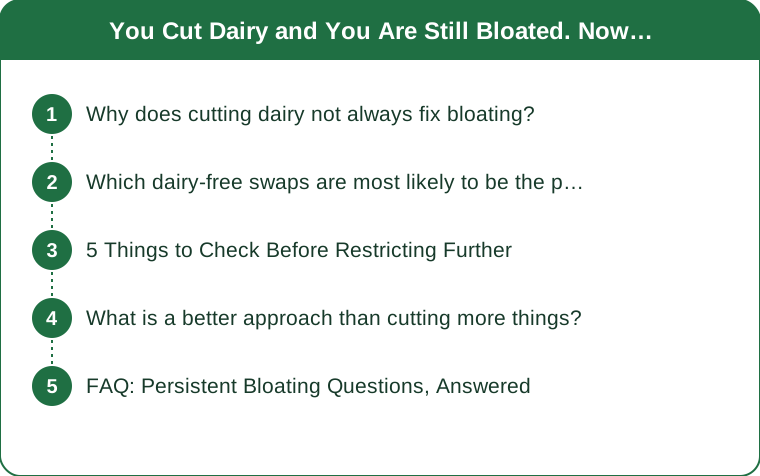
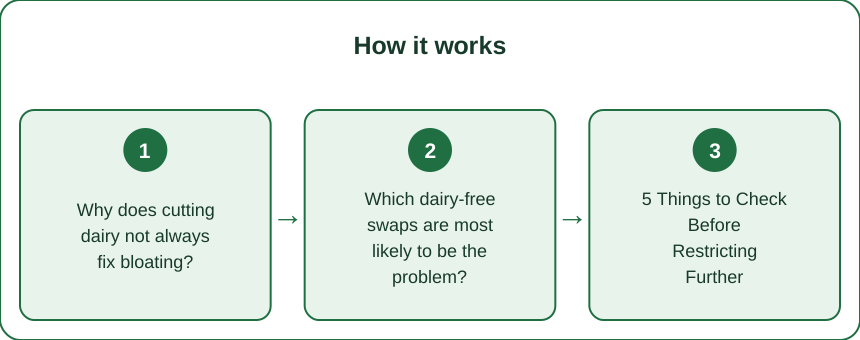
Why does cutting dairy not always fix bloating?
Because lactose is one member of a much larger family, and removing it does not touch the others.
Lactose is a FODMAP - a fermentable oligosaccharide, disaccharide, monosaccharide, or polyol. These are short-chain carbohydrates that are poorly absorbed in the small intestine, pass into the colon, and are fermented by gut bacteria, producing gas. Lactose is the D in that acronym. The rest of the alphabet is still in your diet.
The other major sources:
- Fructans - wheat, rye, onion, garlic, and inulin or chicory root, which is added to a very large number of dairy-free products.
- Galacto-oligosaccharides - legumes, chickpeas, lentils, soy, cashews. These appear heavily in dairy-free protein swaps.
- Excess fructose - apples, pears, mango, honey, high-fructose corn syrup.
- Polyols - sorbitol, mannitol, xylitol, erythritol, plus stone fruit, mushrooms, and cauliflower. Sugar alcohols are extremely common in dairy-free ice cream and protein bars.
So the pattern is common and predictable. Someone cuts dairy, replaces milk with oat milk, yoghurt with a coconut yoghurt containing inulin, cheese with cashew cheese, and protein powder with a pea protein blend. They have removed one FODMAP and added four.
And lactose intolerance may not have been the issue at all. True lactose malabsorption is genuinely common worldwide and varies substantially by ancestry, but bloating is a non-specific symptom with many causes. Self-diagnosis by elimination is unreliable because the elimination changes many variables at once.
Which dairy-free swaps are most likely to be the problem?
Ranked roughly by how often they turn out to be the culprit.
Oat milk. Widely tolerated but a common offender for people sensitive to fructans, and many brands are higher in fermentable carbohydrate than the alternatives. It is also the most popular swap, which is why it comes up so often. Almond, macadamia, and rice milks are typically lower.
Anything containing inulin or chicory root fibre. Added to dairy-free yoghurts, ice creams, protein bars, and fortified drinks as a prebiotic fibre. It is a prebiotic precisely because gut bacteria ferment it enthusiastically - which is the same mechanism that produces gas. Check the ingredient panel for inulin, chicory root, and Jerusalem artichoke.
Sugar alcohols. Sorbitol, maltitol, xylitol, and erythritol appear in most dairy-free frozen desserts and many bars. Maltitol is the worst offender for most people; erythritol is generally the best tolerated but not universally.
Legume-based protein. Pea protein, soy protein, and chickpea-based products carry galacto-oligosaccharides. Anyone who swapped whey for pea protein has made a significant change in fermentable carbohydrate intake.
Cashew-based cheeses and creams. Cashews are high in galacto-oligosaccharides and are the base for most dairy-free cheese alternatives. Coconut-based versions are usually gentler.
Increased vegetable and legume intake generally. People who cut dairy often simultaneously eat more plants, which is broadly good and also a genuine increase in fermentable fibre. The bloating from that is usually transient over a few weeks as the gut adapts - but it muddies the picture entirely during the trial.

5 Things to Check Before Restricting Further
1. Read every label for hidden dairy. Whey, casein, caseinate, lactose, milk solids, ghee, and lactalbumin appear in bread, processed meat, crisps, protein bars, and medications. If the elimination was incomplete, the trial is uninterpretable. This takes one shopping trip and settles the question.
2. Audit your substitutes for inulin and sugar alcohols. Line up every dairy-free product in the kitchen and read the panels. Most people find at least two things they did not know contained a fermentable fibre or a polyol. This is where the answer is found more often than anywhere else.
3. Look at the timing rather than the food. Bloating that appears reliably in the late afternoon regardless of what was eaten, or that worsens across the week and settles at weekends, points towards eating pace, meal spacing, air swallowing, or stress rather than a specific ingredient.
4. Check how fast you eat. Eating quickly, drinking through a straw, chewing gum, and carbonated drinks all introduce air, which produces genuine abdominal distension that is entirely unrelated to what the food contains. It is unglamorous and it is a real cause.
5. Consider that it may not be food. Constipation is a very common cause of bloating and does not require any dietary trigger. So are hormonal fluctuations across the menstrual cycle, which produce genuine bloating in the luteal phase for many people. Neither responds to dietary elimination, and both are frequently missed while people are busy removing foods.
What is a better approach than cutting more things?
Structured reintroduction and targeted testing beat progressive restriction, which tends to make life harder without producing answers.
Step one: fix the substitutes before eliminating anything else. Swap oat milk for almond or lactose-free dairy, drop inulin-containing products, remove sugar alcohols, and reduce legume-based proteins temporarily. Give it two weeks. A meaningful proportion of people find the problem resolves here, which means dairy may never have been the issue.
Step two: test lactose specifically rather than dairy generally. Lactose-free milk contains all the protein, fat, and calcium of ordinary milk with the lactose already broken down. If lactose-free dairy is fine and ordinary dairy is not, that is a clean answer. If both cause symptoms, the issue may be a milk protein sensitivity or something unrelated to dairy entirely.
Step three: get help before doing a full elimination diet. A low-FODMAP diet is an effective, evidence-supported approach for irritable bowel syndrome, but it is a structured three-phase protocol - elimination, reintroduction, personalisation - designed to be run with a dietitian. Done alone and open-endedly, it becomes a needlessly restrictive long-term diet that can harm the gut microbiome and nutritional intake.
And know the signs that need medical attention rather than dietary experimentation: unintentional weight loss, blood in stool, persistent changes in bowel habit, anaemia, difficulty swallowing, symptoms starting suddenly after age 50, or a family history of coeliac disease or inflammatory bowel disease. Coeliac disease in particular must be tested for while still eating gluten, which is a good reason not to eliminate more foods before seeing someone. This is general information, not medical advice.
FAQ: Persistent Bloating Questions, Answered
Why am I still bloated after cutting out dairy?
Most often because the substitutes introduced other fermentable carbohydrates - oat milk, inulin, sugar alcohols, or legume proteins - or because the original cause was not lactose. Bloating is a non-specific symptom with many possible drivers.
Is oat milk bad for bloating?
It is higher in fermentable carbohydrate than several alternatives and is a common trigger for people sensitive to fructans. It is not bad in general, but if you swapped to it when you cut dairy and nothing improved, it is worth testing almond, macadamia, or lactose-free dairy for two weeks.
What is inulin and why does it cause gas?
Inulin is a prebiotic fibre from chicory root, added to many dairy-free products. Gut bacteria ferment it readily, which is the point - and gas is a direct by-product of that fermentation. Some people tolerate it well and some do not.
When should I see a doctor about bloating?
If it persists beyond a few weeks despite dietary changes, or at any point with weight loss, blood in stool, persistent bowel habit changes, anaemia, or a new onset after age 50. Get coeliac testing done before removing gluten, since the test requires you to still be eating it. This is general information, not medical advice.
TL;DR:
- Lactose is one FODMAP among many; cutting dairy leaves the others in place.
- Oat milk, inulin, sugar alcohols, and legume proteins are the usual replacement culprits.
- Read labels for hidden dairy before concluding the elimination failed.
- Test lactose-free dairy specifically - it isolates the variable cleanly.
- Constipation, eating pace, and cycle-related bloating are common causes no diet change touches.
More restriction is the instinct and rarely the answer. Check what you added before you remove anything else.
Keep Reading
This article is for general informational purposes only and is not medical advice. Always consult a qualified health professional for guidance specific to you.