Dairy-Free Made Delicious: The Practical Switch Guide
Dairy-free eating has gone from fringe to fully catered: most adults worldwide actually lose some lactose tolerance with age (lactose intolerance is the human norm, not the exception), sensitivities are common, and the alternative aisle finally makes avoidance painless. Whether your reason is digestive, skin-related, ethical or experimental, the switch is now more logistics than sacrifice — with one nutritional homework assignment (calcium) and one honest heartbreak (cheese). Here is the complete playbook. (Digestive symptoms that persist deserve a doctor’s look — intolerance and allergy are different animals.)

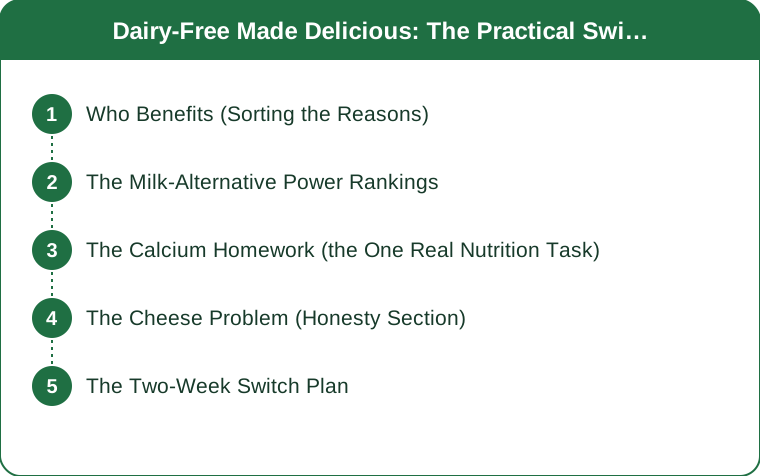
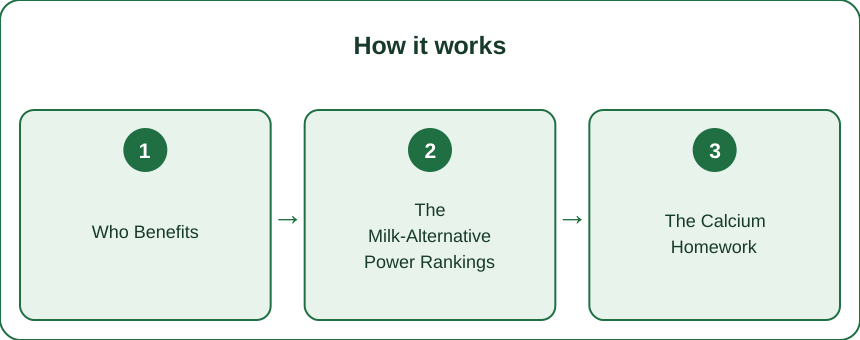
Who Benefits (Sorting the Reasons)
The honest taxonomy: lactose intolerance — the enzyme to digest milk sugar declines after childhood in most of the world’s adults; symptoms are bloating, cramps and urgency, dose-dependent (many intolerant people handle hard cheese and yogurt fine — fermentation pre-digests much lactose); milk protein allergy — an immune response, mostly pediatric, medically distinct and stricter; skin and congestion experimenters — evidence is mixed but individual trials are cheap and harmless (dairy-acne links have modest research support, strongest for skim milk); and the ethical or environmental switchers, who need only the logistics. Your category sets your strictness: intolerance is a dial, allergy is a wall, curiosity is a two-week experiment with a journal.
The Milk-Alternative Power Rankings
The aisle, decoded by use case: oat milk — the all-rounder champion (creamy body, neutral-sweet, foams for coffee; watch added sugar in flavored versions), soy milk — the nutrition winner (the only alternative matching dairy’s protein at 7–8g per cup; the default if milk was your protein source), almond — light and low-calorie but nutritionally thin (fine as a splash, weak as a staple), coconut — rich for cooking and curries, heavy for cereal, and the specialty bench (cashew for creaminess, rice for allergies, pea protein for the best-of-both). The universal rules: buy unsweetened, shake the carton, and check for calcium-fortified — which sets up the homework below.

The Calcium Homework (the One Real Nutrition Task)
Dairy’s exit leaves one genuine gap: calcium (plus vitamin D and, if milk was your protein, that too). The non-dairy calcium roster: fortified plant milks (most match dairy’s 300mg per cup — the single easiest fix, hence buy-fortified), calcium-set tofu (check the label for calcium sulfate — a heavyweight source), canned salmon and sardines with bones, leafy greens (kale and bok choy absorb well; spinach cheats — its oxalates block absorption), almonds, tahini and fortified orange juice. Women’s daily target: roughly 1,000mg (1,200 after 50) — achievable dairy-free with mild intention, missable with none. Two fortified-milk servings plus one tofu-or-greens serving daily basically closes the case.
The Cheese Problem (Honesty Section)
Every dairy-free guide owes you this paragraph: cheese is the hard part, and the alternatives require honest expectations — the science of cheese (casein’s unique melt and stretch) has no perfect plant mimic yet. The current state: cashew-based artisan cheeses are legitimately good as their own category (spreadables and soft styles especially), nutritional yeast delivers the savory-cheesy note in cooking (the pasta and popcorn workhorse), the best shreds now melt acceptably on pizza if you add oil-drizzle patience — and the strategy that actually works: cook cuisines that never needed cheese (most of Asian cooking, much Mediterranean) rather than chasing dairy-shaped ghosts through Italian-American recipes. Lactose-intolerant readers get the loophole: aged parmesan and hard cheeses are nearly lactose-free naturally. Use it guilt-free.
The Two-Week Switch Plan
The practical rollout: week one — swap the daily-volume dairy (milk in coffee, cereal and smoothies goes oat or soy; butter goes olive oil and avocado; yogurt goes coconut or almond-based with live cultures) while leaving edge cases alone; week two — handle cooking (nutritional yeast enters, coconut milk takes cream’s roles, cashew cream learns sauces) and eating out (most cuisines accommodate effortlessly; the question is hidden butter in restaurant vegetables). Keep a symptoms-and-energy journal if you switched for health reasons — two weeks of data beats two years of wondering. And if the trial verdict is partial (yogurt fine, milk not), welcome to the dial: most dairy-free life is custom-fitted, not absolutist.
Dairy-free, delivered: sort your reason (dial, wall or experiment), stock fortified oat-or-soy, do the calcium homework daily, approach cheese with honest expectations and cuisine strategy, and run the two-week rollout with a journal. The alternative aisle finally holds up its end. Your digestion — or your curiosity — gets its answer in fourteen days, oat-milk latte included.
Keep Reading
This article is for general informational purposes only and is not medical advice. Always consult a qualified health professional for guidance specific to you.